Showing posts with label Abomination of Desolation. Show all posts

Monday, February 6, 2023

Things that are NOT signs of the End (a partial Matthew 24 commentary)

[1] And Jesus went out, and departed from the temple: and his disciples came to him for to shew him the buildings of the temple.
[2] And Jesus said unto them, See ye not all these things? verily I say unto you, There shall not be left here one stone upon another, that shall not be thrown down.
[3] And as he sat upon the mount of Olives, the disciples came unto him privately, saying, Tell us, when shall these things be? and what shall be the sign of thy coming, and of the end of the age?

I agree with Preterists that when The Disciples said "these things" they were thinking of what Jesus said in the prior verse and probably also what He said at the end of chapter 23.  And I suspect they assumed those things happen at the same time as what they asked about next, the sign of Jesus's Parousia and of the end of the Age.

However there is a theme throughout the Gospels of the Disciples being mistaken about certain things and Jesus then trying to correct them.  And that this is one of those is implied by what Jesus says next.

[4] And Jesus answered and said unto them, Take heed that no man deceive you.

Assumptions are frequently key to how deceptions work.

Verses 5-7 are what verse 8 calls the beginning of sorrows.  They are also called the Non Signs by the late Chuck Missler because of the last part of verse 6  "see that ye be not troubled: for all these things must come to pass, but the end is not yet".  But I think it's particularly notable that the "wars and rumours of wars" was what directly preceded that statement.  

The Temple was destroyed because of a war, and it wasn't the only war going on at that time, there had recently been rebellion in Britain and then civil war broke out because of Galba overthrowing Nero starting the year of the four emperors.  The rumors of wars refers to wars that could have happened but were averted, like the tensions between Rome and Parthia at this time.

I'm still of the opinion that the fist proper false Christ was Bar Kochba, but still a more fluid definition of what it means to be a false Christ is applicable to many people both before and during the first Jewish-Roman War.

The verse that proclaims all of these to be not actually signs is rightly used often to make fun of the more sensationalist Futurists.  But it's 70 AD Preterism especially Full Preterism that it outright founded upon ignoring the ramifications of Jesus saying this, if the end was always a mere 40 years away max then it was never not nigh.

I think even the Persecution discussion is really part of the Non Signs, Roman Persecution started with Trajan but the first empire wide one was under Decius and the only really great one was the Diocletian Persecution.  But the end of Roman persecution ushered in Persian Persecution, and even today in many countries Christians are being persecuted.

I've also come to agree with Preterists that the word for "World" in verse 14 being neither Kosmos or Aion is one that can be interpreted as meaning the domain of the Roman Empire.  But even then The Gospel still hadn't reached all of the Roman world by 70 AD.  

It was in the late Second Century that it first came to Gaul and Britannia, I'd been attracted to the various legends and fringe theories about New Testament characters coming to First Century Albion myself in the past, but they don't hold up as even Geoffrey of Monmouth says The British Church began with Lucius in the time of Eleutherius, around then is also when Tertullian first mentions Christians being in Brittan.  There are misleading legends tied even to that Lucius as I don't think he was a King but maybe was Lucius Ulpius Marcellus.  And The Church in Gaul started a little before then with Pothinus and Irenaeus who moved there from Ionia (Ephesus, Smyrna, Miletus).  With Britain you can try to make an excuse that it wasn't part of the Empire yet when Jesus made this Prophecy, but Gaul absolutely was.

Still while verse 14 can be interpreted as having that limited scale I'm inclined to think it's not.  That word translated world is a particularly fancy Greek word for Household.  While Greco-Romans did use if for the Imperium like in Luke 2:1's account of the Census decree.  I think Jesus means the Household of Adam, since Son of Man is the title for Himself that He likes to use when describing The Parousia.

Preterists will then try to prove this was fulfilled in the first century by taking certain things Paul said in Romans and Colossians out of context.  Paul is talking about what the mission of The Church during the Age of Grace is, in context he clearly does not see that mission as actually already accomplished or he wouldn't still be doing what he's doing.  When Preterists "Proof Text" like this it's just like the worst Futurist bad understanding of the concept of using Scripture to Interpret Scripture, just cause those verses use similar language doesn't mean they solve each other.

Verse 15 is where the actual signs of the end start, that is the fig tree showing it's leaves in verse 32, the Generation that sees that is the one that shall not pass away in verse 34.

I've already deconstructed the notion of that being applicable to anything in 70 AD.  I think the similar yet different description in Mark can be applicable to Hadrian's Abomination, but Matthew is different.  Getting into that here would distract from the main point at hand, I'm still not entirely decided on it myself.

Tuesday, June 14, 2022

The Dual Fulfilment Fallacy

I'm someone who is still at the core of my Eschatology a Premillennial Futurist, but who does interpret a good number of individual Prophecies in ways that fit how a Preterist and/or Historicist could interpret them.  

When I try to argue to a fellow Futurist that a certain Prophecy was clearly meant to be the near future of when the Prophecy was given, or even that at least how it begins was, that Prophets can't really be considered confirmed Prophets at all if nothing they predicted was fulfilled in their lifetime.  I occasionally get responses about the Dual Fulfilment concept, making it sound like it's an absolute that every prophecy has at least 2 fulfilments, near and far.  Understanding it this way makes it almsot impossible to definitively argue for anything.

Nathan's Prophecy about the Son of David building The Temple in 2 Samuel 7 is the core foundation upon which the dual fulfilment concept is based, and the reason why it can't even be called inherently Christian, every Jew who believes in a yet future Messiah Ben-David believes this Prophecy has a second fulfilment in addition to Solomon.

But the thing about this most undisputed case of a second fulfillment being needed, is that the first fulfilment failed.  Now make no mistake God always knew what was gonna happen, but the fact still remains that in theory Solomon alone could have been all this Prophecy needed, but he failed, the entire history of the divided kingdom is the legacy of Solomon's failure.  When you properly add that context it's not a dual fulfilment at all, it's only kind of applicable to Solomon at all because of what could have been.

That's why in my opinion dual fulfilments are possible and occasionally worth speculating on.  But to start building doctrine on some absolute expectation that no Prophecy is properly fulfilled till it's fulfilled twice is in my opinion foolish.

A lot of other almost undisputed examples of dual fulfilments are also ones where the second or final fulfilment is Jesus.  But in a lot of those cases it's typology, to Christians the applicability to Jesus is what matters most because we view everything through the lens of Jesus. But I would still call it wrong to act like that Prophecy wasn't actually fully fulfilled till Jesus.  The sense in which Jesus repeats it is a nice bonus for our Christian view of The Bible's metanarrative, but it often isn't at all what the original Prophet was concerned with.

Any Prophecy where I do feel that Prophecy was always chiefly about Jesus, I generally seek to, like with the failure of Solomon thesis, deconstruct the near fulfilment, which for example is how I currently treat Isaiah 7-8.  

However I no longer desire to treat the "antichrist" the same way.  I actually think we're bordering on Dualism heresy when we treat that figure like a mirror image.  So yes in a sense every Hero of The Hebrew Bible is a foreshadowing of Christ, but that doesn't make every villain a similar type of the "Antichrist".

And the thing about a lot of the Prophecies I do think are about the fall of Jerusalem to Rome in 70 AD. 70 AD was in a sense itself the second fulfilment, it was a repeat of the history of the fall to Nebuchadnezzar in 588 BC. so saying it must happen again in the future is arguing for a full on third fulfilment.

What I'm criticizing here is partly stuff I've been guilty of myself in the past on this very blog.  This is a product of how I feel I've grown wiser as a student of Prophecy.

In The Case of the Abomination of Desolation, Jesus tells us that an already fulfilled event will happen again.  However that doesn't mean every detail of Daniel 11-12 (or 9) is going to happen twice, the context of the next Abomination of Desolation could be very different.  I try to define what the AoD is based on the initial fulfilment of those prophecies, but that's it, everything leading up to and following it could and probably will be different.

Monday, April 27, 2020

Can every argument for applying The Olivite Discourse to 70 AD fit the Bar Kochkba Revolt even better?

My answer is not Luke 21 but definitely Mark 13 and Matthew 24 if they can be interpreted Preteristically at all.

First of all even the Preterist interpretation of "this generation", as I documented when arguing for my late date for Revelation there were indeed eyewitnesses to Jesus still around in the reign of Hadrian.

70 AD Preterists obsess over an argument that a Biblical Generation is 40 years because the wandering in the wilderness was to kill off a generation.  But not all of them actually died, that statement was hyperbole, it was mostly just about the 10 spies who gave the bad report.  Numbers 14:33-24 clarifies it was 40 years because the spy mission was 40 days.  Genesis 6 and the lifespan of Moses support making a Biblical generation up to 120 years.

Matthew 24 is the one I'm most strictly futurist on because of certain details completely unique to it, but rhetorically I shall  keep it in mind here.

With Luke 21 it's unique characteristics are what makes it most applicable to 70 AD.  Only Luke 21 actually uses the name of Jerusalem at all, when foretelling it's desolation which is language borrowed from Jeremiah about the fall to Nebuchadnezzar indicating what happened to Jerusalem then will happen again.

But Luke 21 does NOT contain a statement that this time of trouble is will never be surpassed.

The Bark Kochba revolt did not add anything to the destruction of Jerusalem since this time the Rebels never even had Jerusalem to begin with.  But for Judea as a whole that war was far more catastrophic and destructive then the 66-73 AD war and over a shorter period of time.   Many historians consider this the real beginning of the Diaspora.  It is only the fact that it doesn't have it's own Josephus that makes it less analyzed by historians and scholars and less romanticized by artists and poets.

Luke 21 is about things that happened before the "beginnings of sorrows", Matthew 24 about things that happen after, and Mark 13 about things that happen during.  Meanwhile the second time Matthew and Mark's discourses bring up the issue of False Christs has no parallel in Luke at all.

This is significant because contrary to popular opinion the era leading up to and during the 66-73 AD war was NOT filled with would be Messiahs.  Josephus only ever uses the word Christ when describing what Jesus was called. There were would be prophets, and secular revolutionaries, but no claimed Messiahs.  Jewish prophetic expectations of the time were generally that the Messiah can't come till after Rome has already fallen.

Bar Kochba was the first to ever claim to be the Messiah as a rebel leader, that was his innovation.  And he really was the second person after Jesus to ever truly claim that title at all.  Meanwhile since Preterists don't take literally the stuff involving the Sun, Moon and Stars, maybe Stars falling from heaven is also wordplay on the name of Bar Kochba?  Kukbe is the word used in the Peshita?

The Abomination of Desolation is a very specific phrase, that has connotations more specific then just the etymological meanings of the words used to construct it.  Of the two places where the phrase appears in Daniel the one in chapter 12 is probably what Jesus is revealing to still have at least one more yet future fulfillment.  But it's the context in Daniel 11 that defines it.

There are three or four different Hebrew words that get translated "Abomination" in the KJV, the one used in Daniel is not even related to the one used in Leviticus 18-20 and Ezekiel 40-48.  But more importantly to the topic at hand, the precise one used in Daniel is everywhere it appears a synonym for an Idol or False god, from Deuteronomy 29:17 to 1 Kings 11 to Jeremiah 32:34.

But what makes the Abomination of Desolation special is it's being placed inside The Temple (not near it) by a Pagan ruler who had outlawed their faith.  The history of the Hasmonean revolt was to first century Jews not just the reason behind Hanukkah, it was to them as the Revolutionary War or French Revolution is for modern America and France.  When Jesus used this phrase he knew exactly what imagery he was evoking and so did His audience.

Now I'm open to a more "creative" interpretation of what a Futurist fulfillment of this for Matthew 24 may look like, but that's about redefining what this would mean for the New Testament Church with the help of II Thessalonians 2 just as we redefine a number of Hebrew Bible concepts under the doctrine that now we are The Temple.  If you're going to insist this is about the Judea of that time, then you have to be specific to what that idea meant to those Judeans.

70 AD Preterists bend over backwards coming up with every excuse they can to apply that phrase to something that happened in 70 AD.  They take a passage from the Talmud claiming Titus had sex with a whore on a Torah scroll and sliced open the veil with his sword.  Leaving aside how I doubt Titus would have had the means, motive or opportunity to do that from what the actual eyewitness Historian tells us, even this Talmud passage doesn't call that an Abomination of Desolation or compare it to Antiochus Epiphanes in any way.

The timing is also wrong, by the time Titus was able to anything anywhere near The Temple it was already too late to run.  Jesus speaking of the Abomination of Desolation as an event that begins the time of trouble not occurring at the middle or end of it. That fit Hadrian who's said to have set up the initial Idol in 31 AD sparking the Rebellion even though the full Temple is built after.

Preterists aren't the only ones refusing to distinguish between the Olivet Discourses, there are also Futurists who want to use Luke 21 to say Jerusalem will be surrounded by armies again.

Yes the three discourses are "parallel" in a lot of ways, but the differences are there for a reason and ignoring them because you don't want to think Jesus was foretelling more then one thing is simply not respecting the text.  In the case of Luke it has to do with how this isn't even the only place that Gospel records Jesus talking about the fall of Jerusalem, that is a theme of the entire Gospel in a way it's not in the others.

So plenty of people want to argue that Luke 21:20 is about the same thing as The Abomination of Desolation because Jesus then advises basically the same reaction.  As if there can't be more then one good reason to get out of Dodge.

Remember the OG Abomination of Desolation preceded that Jewish revolt, and since they won that war the city was never surrounded by armies.

One of the oldest examples of Patristic support for viewing the Abomination of Desolation as already re-fulfilled is Jerome applying the term to the Statue of Hadrian set up where The Temple formally stood which was still standing when he wrote his commentary on Matthew.  Jerome may have been off on saying it was specifically over the Holy of Holies, in the Bordeaux Pilgrim the two Statues he saw were separate from the "stone" the Jews anointed which I think may have been where the Ark once rested.  Epiphanes' statue was on the Brazen Altar according to 1 Maccabees 1:54-59.

We even have a secular pagan gentile source on this happening, Cassius Dio.
[69.12.1] At Jerusalem, Hadrian founded a city in place of the one which had been razed to the ground, naming it Aelia Capitolina, and on the site of the temple of the [Jewish] god, he raised a new temple to Jupiter. This brought on a war of no slight importance nor of brief duration, 
[69.12.2] for the Jews deemed it intolerable that foreign races should be settled in their city and foreign religious rites planted there. So long, indeed, as Hadrian was close by in Egypt and again in Syria, they remained quiet, save in so far as they purposedly made of poor quality such weapons as they were called upon to furnish, in order that the Romans might reject them and they themselves might thus have the use of them. But when Hadrian went farther away, they openly revolted.
Meanwhile somewhat less reliable sources like the Historia Augusta say Hadrian also banned Circumcision and sacrificed Pigs to this Idol making it echo Antiochus Epiphanes even more.  And like then this caused the war rather then being caused by it.  It seem Pigs were depicted on Coins minted in Aelia Capitolina.

And like in 70 AD the Jewish Christians of Jerusalem did as Jesus advised and fled, becoming the Nazarenes of later generations, some may have went to Mesopotamia and also became among the ancestors of the "Nestorians" or other Syraic Rite sects.

Sunday, April 26, 2020

The Sequence of Events associated with The Parousia

The foundational premise of this blog, that the events of Revelation are chronological, they are presented as a clear sequence of events.  Is not based on saying all Prophecies are that way, but that Revelation is uniquely chronological because it's purpose is to REVEAL how everything else ties together.

In some cases the apparent chronology of events in other prophecies fit Revelation's fine.  In some cases where a dual fulfillment may be involved it could be the older prophet's sequence of events fits the near/local fulfillment more then it does the final Eschatological fulfillment.

It's mainly in the late 30s of Ezekiel where it looks like YHWH revealed things to that Prophet practically backwards if one of my theories about them is true.

But it is in particular when a lot of things seem to be happening very quickly over a relatively short period of time that it shouldn't be that difficult to get that the shorter briefer description is perhaps not as strictly chronological.  If someone came to you and said "man you won't believe all the crazy stuff that just went down at the corner" and then rapidly rambled a bunch of things you wouldn't be too surprised to find out the order of events as they first described them were slightly off.

And that is the case with The Parousia.

The word Parousia doesn't appear in Revelation, but the events associated with it when Jesus first defined it for us in Matthew 24:30-31 and later elaborated on by Paul in the Thessalonian Epistles and parts of 1 Corinthians 15, and has a lot of other even briefer references.  Clearly happens in Revelation starting in Chapter 11 Verse 15 and are finished by the end of chapter 14.  It is pretty clear to me that Revelation is far more concerned with the proper order of events.  Still I do believe they will all happen over the course of a few days at most and maybe less then an hour.

However pretty much every Futurist who disagrees with Pre-Trib founds that opposition on some clear timing statements in Matthew 24 and II Thessalonians 2 that place the "Abomination of Desolation" before any of the Parousia events.  But doesn't my chronological interpretation place that in the middle of the Parousia?

Strictly speaking The Abomination of Desolation is not in Revelation Chapter 13.  That chapter is about the deification of "The Beast" broadly speaking, and mentions an "Image" that it doesn't tie to any particular geographical location.  But there is no illusion to anything happening in specifically Jerusalem or any other city.

Paul associated the Man of Sin showing himself to be God in The Temple with his revealing.  I have already argued for the removal of restraint being in Revelation 9, and after that comes the first clear reference to The Beast in chapter 11 when he's described as ascending out of the Abyss and kills the Two Witnesses.  Chapter 13 is just his formal introduction.

"But didn't you just earlier this month make a post arguing the "Great City" of chapter 11 isn't Jerusalem?"

Again that was a post made for arguing rhetorically with Preterists and anyone else who thinks "Great City" must always be referring to the same city every time it's used.  If the name of Babylon doesn't prove anything geographically neither does being tied to the Crucifixion.

However I also no longer necessarily think the AoD has to happen in Jerusalem.  In fact I'm definitely coming to highly doubt a proper Third Temple will be built at all.  There are aspects of the Historicist interpretation of II Thessalonians 2 and Daniel 7 that make sense to me.

However I don't think it's already fulfilled by The Pope or even the Byzantine Emperors I've talked about playing devil's advocate with them.  It will be something unmistakable when it happens, in such a way that even if it happens nothing like how any of us expected we will still not doubt that it just happened when it does.

Maybe it'll happen in Jerusalem, maybe it'll involve a Third Temple, but what's important is it will not be debatable anymore once it happens, that's the key point of why Paul was bringing it up, it obviously hadn't happened yet, and if it obliviously hadn't happened yet then it hasn't happened yet now.

Or maybe the Son of Perdition being "revealed" is really when he kills the Witnesses in Revelation 11:7, given that is the first time Revelation is definitely indisputably referring to that individual.

Friday, October 11, 2019

The Vicar of Christ

The title "Vicar of Christ" as a title for the Bishop of Rome aka The Pope is a major factor in Papal Antichrist arguments, both among Historicists and Futurists who want to make a Papal Antichrist view work within Futurism.  The title in the various ways it's been translated implies being a mortal representative of Christ who has all of Christ's authority.

One Biblical pillar of the argument is viewing the Temple that Paul refers to in II Thessalonians 2 as being The Church not a Temple Building, and thus the true "Abomination of Desolation" is a Mortal Human within the Church claiming the authority of Christ.  That is an issue I've discussed a lot in the past and may discus more in the future.

The other is interpreting the term "Antichrist" in John's Epistles as meaning "in place of Christ" rather then "opposed to Christ", thus suggesting "Vicar of Christ" can be viewed as a direct Latin translation of that term.  My looking in the Strongs Concordance at other Biblical Greek words with the anti- preffix shows that it seems to be used with both meanings.  But the context of what John was saying about "Antichrists" and the "spirit of Antichrist" supports the "opposed to Christ" meaning.  Everything John says to define what makes one "an Antichrist" is about what they say Jesus is not rather then what they say they are.

I'm a Futurist who has been trying to be very open minded to forms of Historicism, but all while trying to make it less dependent on specifically the Papal view of The Antichrist.  So what I want to explore here is how the Pope's claimed authority is not the only "Vicar of Christ" heresy within the Church.

The kernel of truth in the Vicar of Christ doctrine is that spiritually Jesus has given some of His Authority to All Believers.  What I consider inherently dangerously heretical (whether or not it's relevant to Bible Prophecy) are two sometimes overlapping extensions of that.
1.  Any individual or group or office within the Church claiming Christ like Authority even over other believers, that's the Doctrine of the Nicolatians.
2.  Using this Authority to justify setting up any kind of Christian Theocracy, Christians seeking to rule over non-believers when Christ's Earthly Kingdom has not yet been inaugurated.

To an extent the Vicar of Christ idea is what justifies all ecclesiastical hierarchy, even Independent Baptists talk about the local Pastor as being an "Under Shepherd".

However the "Divine Right of Kings" doctrine is also based on claiming Kings are Earthly Vicars of Christ.  But contrary to popular opinion forms of that idea predated the Protestant Reformation.  The Biblical basis for the Medieval "Royal Touch" idea was Mark 16, again claiming specifically for the King something every Believer is theoretically capable of.

It used to be for the Eastern Orthodox Church the Eastern Roman Emperor (Byzantine Emperor in many modern history books) was their Vicar of Christ, that's discussed right on the Wikipedia page.  This YouTube Video about Greek Orthodoxy reveals how even today they have the Emperor enthroned within their Churches.  This is really creepy when you remember that claiming Caesar as their King was what those who called for Christ's Crucifixion did.  In the sense that I view the Orthodox Church as Pergamon in Revelation 2-7, that Throne is Satan's Seat.

Even in the Old Testament human kings are viewed as mortals usurping authority that belongs to God, YHWH said through Samuel that Israel was rejecting Him as King when they asked for a Human King like the heathens had.  Some Biblical Kings wound up being decent leaders, but the overall meta-narrative is still Anti-Monarchy.  I personally believe that especially in The Torah "Moloch" should always be translated "King" and "Milcom" should read "Kings", the passages condemning their worship are actually condemning the worship of Human Kings.  This also comes up in Ezekiel 28 and Acts 12 which I've argued elsewhere may be key to understanding what the Abomination of Desolation is.  There is also an anti Monarchy theme to the story of Gideon and his sons.

Some Preterists (and secular scholars) think the Temple Paul was talking about in II Thessalonians 2 was a Temple of the Imperial Cult that existed in the city.  Not every city had any particular Imperial Cult presence (in Asia the two Churches with specific references to Martyrdom in Revelation 2-3 were the two Imperial Cult centers of the Province), archaeologically we know Thessaloniki was an Imperial Cult center, so that could be relevant.  

Galerius the chief architect of the greatest Roman persecution the Church faced, built a Rotunda in Thessaloniki that scholars are still unsure what it was for, the popular theory it was intended to be his Mausoleum though he wound up being buried in Serbia.  At first glance that theory would seem to conflict with a Christ usurper within the Church theory.  But in the future the Roman Emperors did transition from claiming to be Pagan gods to claiming to be the Vicar of the Christian God.  It is connected to the Arch of Galerius which like other Triumphal Arches has imagery that basically Deifies the Emperor for whom it is named.

What's fascinatingly coincidental is how Thessalonica played an important role in that transition.  The Edict that made Christianity the state religion of the Empire is known as the Edict of Thessalonica because that's where it was issued, in fact Theodosius I was also Baptized in Thessalonica by it's local Bishop.  And he turned Galerius's unused Rotunda into a a Church.

Christian Emperors were having Messianic Mojo applied to them even before then however, just look at how Eusebius talked about Constantine.

I made a post focused on the reign of Justinian arguing for the Eastern Roman Empire being The Little Horn of Daniel 7.

One thing kind of well known about the Roman Empire is that all through Antiquity it never officially admitted to being a Monarchy, they adamantly denied that the Emperors were Kings and never formally called them Rex in Latin or Basileus in Greek.  Now it's popular to rather dismissively mock that, but I want to say as an American that I feel it's hypocritical to say obviously the Caesars were Kings but United States Presidents are not.  There were limits on the Emperor's authority, they did often have to fight with the Senate.  Their near Monarchical power came from combining offices that were usually separate under the old Republic.  Princeps is literally the Latin word that President comes from (same with Premier and Prime).  Imperator basically means "Commander in Chief of the military", and the President's Veto power gives him the power of a Tribune of the Plebs.  The only meaningful difference is the U.S. President doesn't serve for life, but they would have if Alexander Hamilton had his way.

What's not so well known is that at a certain point this denial of Kingship stopped.  Emperor Heraclius (who possibly descended from the Armenian Arascid Dynasty and thus the Seleucids) abandoned the title Imperator and took the title Basileus in September of 629 AD, he also took the Persian title "King of Kings".  So he can very literally be called the Eight King of Rome.

Leaving aside the symbolic political significance that had for Rome and looking at the above theological significance in light of what I've talked about in this post.  He was not the first Christian to formally hold a title of Kingship, but none before him ruled a Kingdom nearly as large as his, and none before him ruled Jerusalem or the land of the Seven Churches that Revelation was written to, or Thessalonica.

On December 12th 627 AD Heraclius was wounded in battle at Nineveh but didn't die and then destroyed another important Persian capital. He also made a Covenant with the Jews that he broke in the Spring of 630 AD.

And like Justinian his relationship with the Miaphysite churches was complex.

When Constantinople fell in 1453 AD they had three claimed Emperors in Exile and then a number of states started claiming to be successor states to Constantinople.  The one that's relevant to this discussion of the Eastern Empire however is Russia's Claim, the theological position the Emperor had in the Eastern Orthodox Church wound up being inherited by the Tsars.  Meaning the Orthodox Church didn't cease to have an Emperor serving as their Vicar of Christ till the deaths of Tsar Nicolas II and his family in July of 1918.

I've said before I don't like the logic of the Day=Year theory.  But I shall briefly play Devil's Advocate for it's potential applicability here.  On the Biblical Hebrew Calendar the year that Heraclius proclaimed himself Basileus started in March or April of 629.  If we viewed that as the first year of a calendar, it's 1290th year would have been Spring 1918- March 1919, the year that Tsar Nicolas II died.

The Wikipedia Page for 647 refers to certain events that happened to the Byzantine Empire as "fatally" wounding it.  The actions of Constans II in 658 to early 659 could be viewed as the healing of that "fatal" wound.  1260 years from then takes us to the same time period just discussed, the end and aftermath of WWI.  Tsarist Russia wasn't the only Byzantine successor state to end (or change it's form of government) then, that was also when the Ottoman Empire ceased.  It also ended two successions of Western Emperors in Austria and Germany.

Putin has not formally claimed this aspect of the Tsar's old authority yet.  But his relationship with the Russian Orthodox Church suggests he may want to.

Monday, October 23, 2017

The Vail of The Tabernacle

I did a post awhile ago on the theory that The Tabernacle might have actually been a Dome, and also speculated on Solomon’s Temple being the same.  More recently I alluded to this in my post about where Solomon’s Temple was located.

What I want to talk about today is specifically the Vail that separates the Holy of Holies from the Holy Place.  

The second Temple definitely did have the shape we normally think of, where The Vail basically splits one bigger room in half, that's how the Vail being torn when Jesus was Crucified was described.

But in the Hebrew, I’ve studied the use of the Hebrew word used for this Vail, Poreketh.  It is often described as “covering” the Ark, and the Ark is often described as “within” the Vail.  The first time it is mentioned in Exodus 26:31-32, it is hung upon four pillars.

So, I’m now thinking that the Holy of Holies is more like a smaller Tent within the Big Tent.

This helps make more sense actually out of how the Vail and the Holy of Holies are cited as the Biblical precedent for the Ciborium that many churches have, which is usually a sort of four pillared Canopy.  The most famous currently standing one is probably St. Peter’s Baldachin which stands directly under the Dome of St Peter’s Basilica.

Ciboriums were originally built over Tombs it seems, including and possibly starting with the traditional site of Jesus Tomb in the Church of the Holy Sepulcher (it’s not there anymore, it now looks like a mini building under the Dome), which essentially does serve as the Holy of Holies if you look at that Church like an echo of The Temple/Tabernacle.  The original version of St Peter’s Baldachin (which covers the traditional site of St Peter’s Tomb, though I think it’s actually Simon Magus buried there) was allegedly made from Pillars from Solomon’s Temple brought to Rome by Constantine.

Justinian’s Hagia Sophia in Constantinople seems to have popularized building them over Altars.  I can’t discern whether or not the Nea Ekklesia of the Theotokos had one.  An Altar was placed under the one in St Peter’s later.  The current version of St Peter’s has four winged Angels over each Pillar.

It could be interesting to compare to the Cuppah, the Canopy of modern jewish wedding ceremonies, a custom which doesn't seem to be directly Biblical.  But Christians love to look for typology in Jewish wedding customs.  

The word appears three times in The Hebrew Bible, in Isaiah 4:5 where the KJV renders it “defence”, the context fits well as a reference to The Tabernacle.  In Psalm 19:5 the KJV renders it “Chamber”, there the Bridegroom comes out of it.  But in Joel 2:16 it’s rendered in the KJV “Closet”, and there the Bride comes out of it.  Psalm 19 is using the Bridegroom as an idiom of God and/or the Messiah, fitting the expected typology.  Joel 2:15&16 I’ve argued many times before is an Old Testament Prophecy of the Rapture.  

Another Hebrew word for Vail or Veil is Radiyd.  It’s very different from the one used for the Vail of the Tabernacle.  But if it can be used as a synonym, it’s interesting how it’s only used twice.  Isaiah 3:23 doesn’t seem to put any particular importance on it.  But in Song of Songs 5:7 it is used of Shulamith (the Bride’s) Veil.  And that’s interesting since I’ve argued, citing that verse, that Shulamith should be viewed as the type of Christ not of The Church.

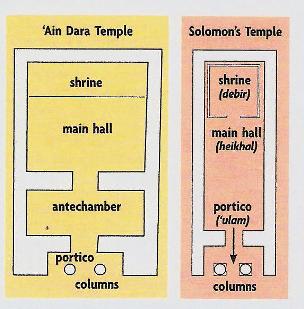
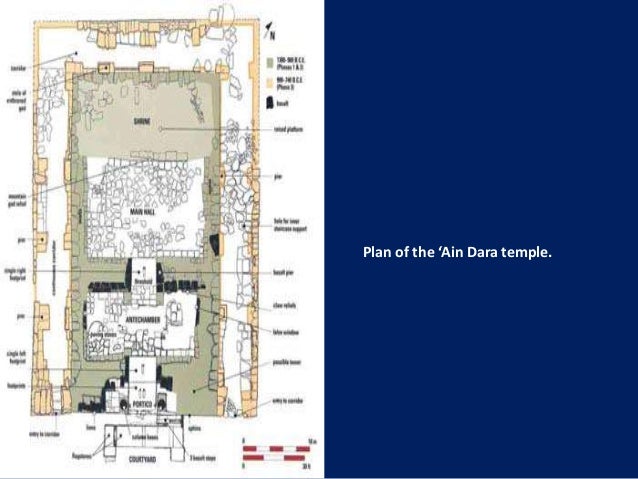
The Second Temple did have the design we usually think The Temple had, we know this thanks to Josephus.  Perhaps the Second Temple’s design was unwittingly influenced by Pagan Temples like the one at Ain Dara, often compared to Solomon’s Temple by skeptics.  Here is one picture for reference.  And another.

On the subject of potential relevance to the Abomination of Desolation.  Much has been made of Paul in 2 Thessalonians using the Greek word Naos for Temple, and whether or not that supports a not strictly literal interpretation.

Thing is, that Greek Word has become also a name for a type of Egyptian Shrine, probably thanks to the Ptolemies.  The wikipedia page for Ciborium suggests the Egyptian Naos was something similar.  And the Naos was linked to the worship of Pharaoh, with Pharaohs often depicted as enthroned in one.  So that adds some new context to my Egyptian Antichrist theory.

Interestingly, I saw a suggestion recently that the Vail of the Tabernacle/Temple represents Satan in a sense, it's Satan who separates us from God.  This was suggested unrelated to debates about if the Tabernacle and Veil originally looked how we commonly think of them.  

But the interesting context that provides here is the emphasis I put on how the Veil is described as "Covering" the Ark.  And how Ezekiel 28:14 calls Satan the Anointed Cherub the Covereth.  And verse 16 again describes him as "covering".  It is commonly interpreted that this Cherub was a 5th Cherub.  The four we usually think of surround the Throne, and Heylel ben Shahar covered it.

Now, Satan has his own Throne, mentioned in Isaiah 14, that Revelation says he will give to The Beast. And for the Egyptian connection, that fits Satan being Sobek, who was often viewed as the Patron of the throne and protector of Pharaoh.  The Hebrew word for Covering or Covereth I just mentioned has also been translated "defend" in some places.  Which fits the Pharaoh being the "Great Dragon" of Ezekiel 29:3 and Revelation 12:3-9.  Which makes it interesting that the Vail is often thought to have been red.

And this would be a good time to remind people of my The Mercy Seat is NOT a Throne post.

Saturday, March 4, 2017

Those who receive The Mark of The Beast will have been deceived

Revelation 19:20.
"And the beast was taken, and with him the false prophet that wrought miracles before him, with which he deceived them that had received the mark of the beast, and them that worshipped his image. These both were cast alive into a lake of fire burning with brimstone."
I had completely overlooked this in many past studies on this Blog where I was adamant in saying the deception is over when The Abomination of Desolation happens.

This was something that was a product of Chuck Missler's influence.  How he said those who took the Mark were making a conscious decision to knowingly choose The Beast over Jesus.

This however strengthens another premise on this Blog.  The Antichrist may not be as Popular as we assume.  Where I suggested the possibly that The Beast's system may be a form of Torah observance.  Because as far as The Bible is concerned the only Deception it's worried about is something masquerading as true Biblical Worship.

The question however remains.  How is this Compatible with II Thessalonians 2, and part of Revelation 13, describing The Beast as speaking against The God of The Bible?  I don't know exactly.  Maybe they're not as literal as I took them, claiming to be God is speaking against God.  Maybe it's a heresy with a Gnostic aspect of separating Elohim from Yahuah to it.  There are a few aspects to consider.  Or given the emphasis on Blastphemeing His Name, maybe it's about the deception that YHWH is a Pagan name added to the Torah by later scribes.  Or maybe the Name being Blasphemed is Yeshua/Iesous/Jesus not YHWH.

But the big thing about taking The Mark being defined as a deception.  Is how that fits in the context of Revelation 14 guaranteeing all who take The Mark go into the Lake of Fire.

I finally noticed what I overlooked here well before I made this post.  Because you see I was uncomfortable with this before I became a Universalist.  That these people are defined as not fully knowing exactly what they were doing, yet are eternally damned anyway.

But now that I no longer view the Lake of Fire as Eternal Damnation, but merely a purging fire that will not be the same for all who enter it.  It no longer feels as inherently illogical.

Friday, March 4, 2016

The Mercy Seat is NOT a Throne

I believe Ron Wyatt's proposed location for the Red Sea Crossing and Mount Sinai (Jabal El Lawz) are mostly correct, they were confirmed by Bob Cornuke and endorsed by Chuck Missler.

But I'm inclined to be much more skeptical of Ron Wyatt's other claimed discoveries, I haven't looked too deep into most.  But I'm most unnerved by many implications of his Ark of the Covenant/Mercy Seat claim.

For starters it's dependent on the Garden Tomb model of where Jesus was crucified and buried, which I find interesting but has a major flaw with the Tomb being way to old, (Jesus was buried in a new Tomb no body had previously been buried in,) I haven't seen it's supporters adequately deal with that yet.

But even assuming that theory is correct.  It bothers me how people who fully believe his claim, like especially Michael Rood, are constantly adding this extra Biblical information to how they describe The Crucifixion.

And then there are all the stories he tells about encountering Angels in the room where it was and everything.  If he was explicitly trying to introduce New Scripture we'd all see it as being the same thing Joseph Smith did.

One thing from his story often left out when others talk about it is how he claims the last time he went into that hidden room, the Ark and almost everything else was gone, with the implication that the Israeli Government took them.  And when he tells that story about the Tablets, the Angel defines the Tablets as being The Ten Commandants which contradicts The Bible, and then ties it into the Seventh Day Adventist view of the Mark of The Beast.

I've been a strong supporter of the Ark being in Ethiopia but getting there a different rout then the Menelik legend.  Following the research of Graham Hancock (not a Believer) in his The Sign and The Seal which was followed up by Believer Bob Cornuke and endorsed by Chuck Missler.

One thing both those Ark theories have in common is claiming with alleged eye witness testimony that The Mercy Seat is a Throne.  Which I accepted myself at face value till I decided to look deeper into that a few weeks ago, and found that claim doesn't hold up, and is based on a bad translation.  Because of that I've been starting to doubt Cornuke's claim somewhat too.

The "Mercy Seat" is one word in The Hebrew.  Strong number 3727 Kapporeth, which comes from from 3722 Kaphar being it's feminine plural.  They both mean Mercy, no word for chair or seat or throne is used.  The Greek term used in Hebrew 9:5 is Strong number 2435 hilasterion which comes from 4233, is the same.  The Greek word for Throne that is sometimes translated Seat particularly in Revelation is Thronos.

Jeremiah 3:17 following 3:16 is the main Bible verse Chuck Missler likes to cite to say the Throne is the Mercy Seat and thus The Mercy Seat has eschatological significance.  He then ties that into Ezekiel 43:7.  The Hebrew word translated Throne in both those verses, and of God's heavenly four wheeled flying Throne, and the Throne of David is Kicce, strong number 3678.  In Ezekiel 43:7 I feel the Mercy Seat, if it will still exist at all, is probably Yahuah's Foot Stool rather then Throne.  That fits 1 Chronicles 28:2 and Psalm 132.

When God is described as dwelling "between the Cheirbuim" that could be referring to the Cheirmbum that were part of the design of the Solomon's Temple itself rather then on the Mercy Seat.

Michael Rood's depictions of the Mercy Seat show only 2 of the 4 wings of the Cherubim on the Ark spread out, with the other two at their sides.  That doesn't match what Exodus 37:9 describes.
And the cherubims spread out their wings on high, and covered with their wings over the mercy seat, with their faces one to another; even to the mercy seatward were the faces of the cherubims.
Clearly all 4 wings are spread over the lid.

In Ezekiel and Daniel 7 God is described as having a Four Wheeled flying Throne.  I think the Shekeniah Glory in a sense is that Throne.  I believe Yahuah's Throne in the Holy of Holies of The Tabernacle and Solomon's Temple was the same Throne as his Heavenly Throne.  And if anything The Mercy Seat was his Foot Stool.  The Yom Kippur description in Leviticus 16 clearly has Yahuah ABOVE the Mercy Seat, not on it.

Michael Rood has also made it part of his view of Bible Prophecy that at the start of the 70th Week "The Messiah" who he views as Jesus, will "confirm the Covenant" (referring to Daniel 9 70 Weeks Prophecy), by revealing The Ark to The World.

Now I feel there is an unwitting danger there, I do not question Rood's intentions, I'm convinced he is a true Brother in Christ.  But this idea of an Eschatological role for The Ark/Mercy Seat combined with mistakenly making The Mercy Seat a Throne, I see as having potential for an End Times deception.

Paul in II Thessalonians 2 does describe The Man of Sin as "sitting" in The Temple.  Michael Rood thinks he'll sit on The Ark, so for that reason I'm certain he'll recognize The Abomination of Desolation for what it is when it happens even if he's mistaken on the events leading up to it.

Isaiah 14:13 describes Satan as having a Throne of his own, that he wants to make higher then the Most High's.  The word there is Kicce also.  Haggai chapter 2 refers to The Throne of the Nations.

Revelation 2 in the letter to Pergamos makes reference to Satan's Seat (Seat being Thronos).  Because of the nature of the letters to the Seven Churches, I don't necessarily think Satan's Thronos is literally in Pergamos, though it could be. I may touch on one theory for where it could be later in this study or in a future one.  In my past Seven Churches post I theorized that what Jesus meant by Satan's Seat allegorically in this context was the Serapis Temple (a cult that originated in Hellenistic Egypt based on Osiris and Apis/The Golden Calf and maybe also Apollo) not the more famous Altar of Pergamom.

In Revelation 13 The Dragon/The Serpent/The Devil/Satan gives his Thronos and his power and his authority to The Beast.  The same Authority he offered Jesus in his third Temptation.

In Revelation 16 when the 6th Bowl of God's Wrath is poured out this Thronos is mentioned again.  Because of how this ties into the rest of that chapter and the following ones.  I'm convinced it must be located (at that time) west of the Euphrates.

Going back to Isaiah 14.  Satan wants to place his Throne on the "Sides of the North", on the one hand this refers to God's Heavenly throne room.  But The Tabernacle and Temple is modeled after that.  Psalm 48 is the only other usage of this phrase "Sides of the North", where it is linked to Zion.

Now for those who think The Antichrist could be someone claiming to be the Islamic Mahdi, there are Mahdi Prophecies that say he'll discover The Ark of The Covenant and other ancient Relics like the original Torah Scroll and Gospel to Refute Judaism and Christianity.  Here is a Sunni Muslim website on the subject, one I'll be talking about more in the future.  And here is another Muslim claim that the Mahdi will have the Ark, and that Muhammad had it.

The sources conflict on where these things will be found.  Some imply Antioch, some Rome, given the context of the origins of Islamic eschatology Constantinople could be what is meant by Rome, which would make two options in modern Turkey, same modern nation as Pergamon.  Others say by or in the Sea of Tiberius, an ancient name for the Sea of Galilee.  There is also a related prophecy about the waters receding from Alexandria in Egypt to uncover the treasures of Duhl-Qarnain, further confirming early Muslims saw him as Alexander The Great.

I have my skepticism of the Islamic Antichrist theory, but I do view all these false prophecies as potential satanic seeds for the Antichrist even if they wind up being irrelevant to how the End Times actually plays out.

Another reason to suspect a possible Egyptian origin for a counterfeit Ark would be how the Masonic Enoch built the Great Pyramid theorists like to claim the dimensions of the sarcophagus in the King's Chamber has the same dimensions as the Ark of the Covenant.  I'm not sure how accurate that claim is but I know it's out there.  Here is one crazy variation that says Moses stole The Ark from the Pyramid.

The theory about the journey of the Ark I said above that I used to and still kind of do favor does have it go through Egypt.  In fact II Chronicles 35:21 is thought of as implying Pharaoh Necho had direct access to it.

But the most famous theory about the Ark's fate in modern popular imagination is the one used in the premise of Raiders of The Lost Ark.  Which is that it was taken to Egypt by Shishak.  The common theory among many Atheist Bible Skeptics (if they concede it existed at all) is that Shishak taking it is the only logical fate, but it wasn't fully admitted in the text because of national pride.  I don't know if that was a factor in Lucas and Spielberg using that theory or not.

You can however be an Inerrantist and still favor that theory.  The strongest Biblical argument for the Ark being in The Temple anytime after that is the "Dwelleth between the Cheirbum" references, and I already addressed that phrase.  Besides that Josiah's request in II Chronicles 25:3 tells us that it was removed sometime before then and implies it's location was known, but nothing more concrete.  It being in the same chapter as the Necho reference has been interpreted as explaining why Josiah inexplicably attacked Necho.

Maybe it's possible Shishak took it but the rest of the going to Ethiopia theory of Cornuke is also true.

Maybe an Ark substitute of some kind was created for the Onias Temple?

Another thing Bible critics love to make a big deal out of is objects in the ancient Egyptian Pagan religion that kind of resembled The Ark and claim Moses just ripped those off.

However given what I've argued above one key difference to weaken that argument is that the Egyptian Arks were Thrones for Idols and/or looked like Thrones.  The Japanese Omikoshi I feel is more legitimately similar to The Ark of The Covenant because it's not a Throne, only a container of sacred relics.

So the gist is, could it be some Ancient Egyptian relic will be found in the End Times and claimed to be the Ark?

[Update: Follow Up Post]]

Monday, January 25, 2016

The Eschatological significance of The Spring Feasts

It is popularly said the Spring Feast of Leviticus 23 were fulfilled in the First Advent and the Fall Feasts will be the Second Advent.  And that is mostly true, but the Fall Feasts do come up in the Gospel narrative.

Jesus' Crucifixion is the most important fulfillment of Passover.  But I think it has post shadowings as well as foreshadowings.  In the Book of Acts, Passover (incorrectly translated Easter once in the KJV) and Unleavened Bread continue to come up well after the Pentecost on which The Church was born.

This is a follow up of sorts to my recent post on the Fall Feasts.  That was focused on the Midway Point, this post will deal with how the Week begins and ends.  So like The Godfather Part II it is a prequel and a sequel at the same time.

I shall interpret the time periods from Revelation 11-13 (I'll mention Daniel's too, but I no longer feel Daniel's need to be Eschatological).  The math I did with my current 2030-2037 theory in mind, but I did similar calculations before with other years.  I encourage you to do your own calculations.

Revelation 11:1-2 says Jerusalem will be trodden under the foot of the Gentiles for 42 months.  Many have come up with all kinds of convoluted explanations of what that means, but using Scripture to interpret Scripture this is explained by Luke 21:24 as clearly an expression of military occupation.

"And they shall fall by the edge of the sword, and shall be led away captive into all nations: and Jerusalem shall be trodden down of the Gentiles, until the times of the Gentiles be fulfilled." and the next verse is the Second Coming and The Rapture.  Luke 21:20 through the first part of this verse I believe was fulfilled in 70 AD and Revelation 11 is the last part of the times of the gentiles.  But if it has a second fulfillment in the End Times, I believe it is at the start of the week not the midway point.

After the Two Witnesses are resurrected and ascend into heaven the people of the city (who we were told at the start are mostly gentiles) will believe and praise God, then the Last Trumpet sounds.  That is when the Fullness of the Gentiles are come in (Romans 11:25).

The 42 months I don't think necessarily need to be fulfilled to the day, they're broadly the same time period as the 1260 days but different in the specifics.  42 months before Yom Teruah takes us to (assuming there is a second Adar in there) the New Moon of Nisan three and a half years before.  Allowing wiggle room the siege could happen a little before or after.

The possibly that something will happen in the last month before the Week begins is logical, in the last month of the year the Barley Harvest is what lets Israel know the next New Moon will be the New Year.  Ezra 6:15 tells us the Second Temple was finished on the 3rd of Adar.  It is possible the Third Temple will be finished right before the Week begins, but I also think it possible it could last awhile before it begins.

The Two Witnesses will be killed three and a half days before Yom Teruah.  1260 days before that takes us to about, depending on when the proceeding Barley Harvest is, either the 7th of Nisan or 7th of Iyar.  Ezra 3:8 tells us Iyar was when Zeubabel and Jeshua began their work, they are considered types of the Two Witnesses so the Witnesses beginning their ministry in Iyar makes sense.  The 7th of Nisan is traditionally conjectured from the narrative of Joshua to be when his two spies were sent into Jericho, they too are types of the Witnesses.

I've argued before that the 1290 days are the first half of the Week not the second as usually assumed.  I've gone back and forth on if the Abomination of Desolation should begin or end it.    Either way what does happen at the beginning is the sacrifice and oblation being taken away.

If the 1290 days end on Yom Teruah then they could begin about either the 10th of Nisan or exactly a month before.    I could also see when they end being 10 days before or 10 days after.  If the earlier month for this is what happens it'd be the same with the Two Witnesses, and visa versa.  The 10th of Nisan I think will be important either way.

My theory on the first 6 seals is they happen very quickly in the Nisan that begins the Week.  The White Horseman might be the Antichrist before his death, or might be an anitchrist and/or a decoy antichrist.  Christians who want to co-opt the Rabbinic concept of Messiah Ben-Joseph as someone separate from Jesus could easily see that figure in the White Horseman.  The other three horseman will ride at about the same time, maybe as his allies or maybe as his enemies.

Whatever identity for him is true, I think he'll have his own Triumphal Entry into Jerusalem on the 10th of Nisan.  Maybe as someone many Jews and Christians will accept as a Messiah, or maybe as a conqueror.  And then maybe given a Crown on the 14th of Nisan.  And maybe killed on either the 14th or 26th of Nisan.  Cause either way for most of the first half of the Week the First Beast isn't a factor.

The Fifth Seal is a heavenly event, it shows all Martyrs of the Church, not just victims of a specific persecution.  But it's opening could still correlate to a specific persecution, like the one Jesus described in Matthew 24:9-14.

I've argued before that the Sixth Seal will open on the 14th of Nisan based on it's connection to Acts 2 and Joel 2 making the Earthquake and Darkness when Jesus was on The Cross it's near fulfillment.

I had argued then the 144,000 are sealed in Revelation 7 on Pentecost, I still feel they're connected to Pentecost but they're also called the First fruits in Revelation 14 so I now think their sealing will begin on First Fruits.

In one Seventh Trumpet post I talked about how Jewish custom has the Last Trump on Yom Teruh and the First Trumpet on Pentecost.  Connecting Trumpets to Pentecost is justified by Exodus 19-20 where in the third month when the Decalogue was given on Pentecost the Trumpets were sounded.

I think on the Pentecost following the start of the Week the 144,00 will be saved sparking a massive revival, the latter rain outpouring of the Holy Spirit, a repeat of the Pentecost of Acts 2.  Their Prayers will fill the golden Censor in the Heavenly Temple, it'll be thrown into the Earth causing more Earthquakes and thunder and lighting.  Then the Trumpets will be given to their Angels and the first will sound burning up the green grass and trees right as the Harvest season is starting.

I have no theories yet on when the 2nd-4th Trumpets will sound.  I have a post where I discus the timing of the Fifth and Sixth Trumpets.  Where I conjecture the Five Months the locust torment men will end on the 17th of Nisan, the day Jesus Rose, and Haman was hanged.

The text of Daniel 12 does not in any explicit way link the end of the 1290 days to the Sacrifices being restored.   It could be they're are restored 2300 mornings and evenings (1250 days, about 37 lunar months, 3 years) after their taken away, like Daniel tells us was the case with Antiochus' Abomination.  But in this case that wouldn't end on Hanukkah but in the Nisan that starts year four of the week.  Or perhaps they never will be restored.

If one insists the 1290 days need to be the second half.  If they begin on Yom Teruh they could end on the last day of Unleavened Bread, if they begin on Yom Kippur they could end on the New Moon of Iyar.  Either way fitting what I already suspect that when the Week is over the Israelites won't be able to observe Passover at the proper time and will need to delay to Second Passover.  If they begin three and a half, seven or ten days before Yom Teruah.  Still not quite allowing everything to be cleansed in time for a proper Passover.

The 42 months the Beast is allowed to continue, if they begin in early Tishri or late Elul would end in about Adar, again not needing to be fulfilled to the day.  Purim is when the sons of Haman were hanged.

The 1260 days Israel (The Woman) is in the wilderness begins right after The Rapture, even if they were fleeing in a sense already from the Abomination before.  1260 days from Yom Teruah takes us to about the 20th or 21st of Adar, and 1260 days from Yom Kippur takes us to about the end of Adar and Beginning of Nisan.  This is when their Messiah, a namesake of Joshua, will lead them into the Promised Land from Edom, as shown in Isaiah 63.

I think we need to consider that how the Armageddon reference in the 6th Bowl ties into Revelation 19 isn't quite what we assume.  And also that Satan being sealed in the Abyss is not the same day as Revelation 19 either.

I now respond to Post-Tribbers who say everyone else believes in more then one Second Comings by pointing out that Revelation 19 is never Biblically defined as the Second Coming.  Revelation 14 is where the Greek word Paursia is used.

Zechariah 12-14 is one vision but it has pieces, 9-11 are a separate vision.  Chapter 12 has the reference to Meggido/Armageddon, Chapter 13 has a possible illusion to the Idol Shepherd of chapter 11 being dealt with, and I think maybe the two thirds who are cut off and die are the armies following the Beast in Revelation 19 not Israelites as people often assume, two thirds of all gentiles, or the world's total population.

And Chapter 14 depicts Jerusalem still under siege, perhaps from Satan directly this time.  And Jesus Second Triumphal Entry into Jerusalem from the Mount of Olives.  This one will also be on the 10th of Nisan, this time He'll be riding on a White Horse.  And given a Coronation on the 14th or 15th of Nisan. And perhaps raise from the dead whoever among the saved are still not yet raised on First Fruits (Ezekiel 37). So this Nisan will be important even though the Passover won't be kept till the following month.

The 1335 days is the one number form Daniel I'm most certain on.  It begins on the Yom Teruah that finished Revelation 11 and ends early in Sivan.  There is a strong possibility of it ending on Pentecost or the Sabbath the day before Pentecost.  No matter what the next Sunday after will be the Biblical date of Pentecost.

Pentecost as the day the Church Age began, and the Day Israel as born as a Nation with the giving of the Covenant in Exodus 19-20, fits perfectly as the day to formally begin The Millennium, or the Government that will rule The Millennium and a little after.  Because as I said before the only event that happens right when the Thousand years expire is Satan being released.  So I think the end of the 1335 days will be when Satan is bound in The Abyss.

Will the Spring Feats have relevance after The Millennium?  Well I think Satan will be released the same day he was bound, on if not near Pentecost.  I have a hunch the Gog and Magog war will involves the 17th of Tammuz, 9th of Ave and 3rd of Tishi, because God said in Zechariah he'd make their Fast Days joyous celebrations.

Seven years after 3rd of Tishri fits what I said on the Fall Feasts about New Jerusalem and Tabernacles.  Seven months later may mean they'll be finished cleaning up the dead bodies after Passover and need to do one last Second Passover.

So that is my view of the End Times relevance of the Spring Feasts.

My Hypothesis for the fulfillment of the Fall Feasts in Revelation

I watched much of Michael Rood's Prophecies in the Fall Feasts.  He says much that I found wonderfully edifying, especially on the Seventh Trumpet.  But I disagree on the Final Week beginning and ending in Tishri, I see the Fall Feasts as chiefly the midway point.

I want to lay out my hypothesis here, and while I'll be linking to earlier posts I'm also going against some things I said before in those same posts.  My mind does change as I study more.

I have a post on how the Two Witnesses and the 7th Trumpet fulfill Yom Teruah.  And about the Rapture of The Man-Child.  But I have one thing to add for Yom Teruah.

I'm hesitant to build doctrine on Rabbinic Traditions the way Michael Rood does, but some are interesting.  One idea not gained directly from The Bible is the days of Awe which begin with Yom Teruah and end with Yom Kippur in which the gates of Heaven are open.  Well one more thing we are told about the Seventh Trumpet in Revelation 11 is that the God's Temple in Heaven and the Ark of the Covenant was seen.  Genesis 24:55 could provide a basis for a period of ten days.

2 Chronicles 31 has the first fruits of Hezekiah's harvest begin being heaped up in the third month (the month of Pentecost) and finished in the Seventh month when they are gathered up and placed in the secret chambers of YHWH's House.  The beginning of Revelation 11 tells us the city of Jerusalem will be mostly Gentiles during the first half of the Week.  At the end when most of those people believe The Witnesses after their ascension, that is when he Fullness of the Gentiles is come in.

The days of Awe are the days you can seek atonement, the Judgment is set on Yom Kippur, but it's carried out on Tabernacles.  According to Rabbinic views at least.  That can happen to fit what I will lay out below, but it's not necessary for my argument.

The main interpretation of the twin Goats of Yom Kippur is that both point to Jesus, one bears our Sins and the other's Blood is shed for them.  One is Jesus bearing The Cross the other is him On It.  Biblical symbolism can be layered however, so that preferred view need not conflict with others.

Including the possibility of seeing Satan or other villainous figures in the Scapegoat.  I've argued on this blog before about both Cain and Barnabas.  I've also thought about the Goats of the Sheeps and Goats judgment being cast out.  I really don't like the Book of Enoch's popularity, but it does reflect a possibly very old tendency to see Satan in the Azazel/Scapegoat by calling it's most unique fallen angel Azazel.

What's relevant here is IF you think such a connection is valid, it can justify seeing Yom Kippur as the day Satan is cast out of Heaven.

My study of Isaiah 14 has lead to me to a conclusion that the Eight King ascending out of the Abyss happens after, probably the same day, Satan is cast out of Heaven.  Since I made that study I no longer view his death has needing to happen during the end times.
[Update note: my perspective on Isaiah has changed rendering this point moot.]

Traditional Jewish interpretations of the chronology of Exodus say the 40 days Moses was on Mt Sinai from Exodus 24:18-31:18 were Elul and the Days of Awe.  Near the end of that period is when chapter 32 tells us they made the Golden Calf.  When Moses came down on Yom Kippur they were worshiping it.  Antiochus Epiphanes' Abomination of Desolation was set up 10 days before it was consecrated.

So connecting the Abomination to Yom Kippur could make a lot of sense.  But I still think it possible there is an abomination of sorts at the start of the Week.  But putting these pieces together really helps my theory that the Image of Revelation 13 is the Eight King.  If you're thinking "but he has to kill the Witnesses before Yom Teruah" well I think that Beast is actually the second one.  Ascending out of the Bottomless Pit can apply to both, but Apollyon is The False Prophet.

I think maybe the mortal sword wound being healed isn't a death and resurrection itself but a sign that he's already resurrected.

But for those that insist the Abomination must happen both at about the middle of the week and before the Rapture.  I would consider placing it maybe when the Witnesses die three and a half days before the Rapture.  Or maybe a week before on Elul 23 the day referenced at the end of Haggai 1.  Or maybe 10 days before, Jesus refereed to 10 days of tribulation in the message to Smyrna.  Or maybe the beginning of Elul referenced at the start of Haggai 1.  Post-tribbers think Matthew 21-28 must span three and a half years because of other Biblical importance to that time frame, but Jesus mentioned no specific time lengths.

Yom Kippur imagery possibly still exists in Revelation 14 as well.  In the past I've written off theories that the Rapture doesn't happen all at once.  I'm now more open to that but not in any sense of them being separated by years, but rather less then half a month.  The Church is caught up on Tzom Gedaliah at the latest after being glorified on Yom Teruah.  If you're not saved by the Last Trumpet it's too late to be the Bride, but maybe not too late be a guest at the wedding.  No one I think gets Raptured alive after Yom Kippur.

The Son of Man on the Cloud with the Sickle and Crown is both the High Priest and the Shekinah Glory which are prominent in Leviticus 16.  The 144,000 I see s being a specific group of Church Age believers from each Tribe of Israel, but also representing the whole in a sense.

Those who argue Jesus was born on Tabernacles (a theory I find impossible) like to Translate John 1:14 "And the Word was made flesh, and dwelt among us," as "And the Word was made flesh, and tabernacled among us".  Well if any use of "dwell" or it's word forms can justify an illusion to Tabernacles, let's look at Revelation 13:6 talking about The Beast.

"And he opened his mouth in blasphemy against God, to blaspheme his name, and his tabernacle, and them that dwell in heaven."  I've long viewed this as proof we are Raptured by this point.  Now I don't think we're at Tabernacles yet, I see this as the II Thessalonians 2 abomination event.  But it shows the conditions are in place.

One of the themes of Revelation 14 is the Grape Harvest.  The Grape Harvest has to be done before Tabernacles, Tabernacles is the festival to celebrate the Harvest.  One thing you can point out to undermine people's assumptions about how the Last Supper relates to Passover is to point out that there is no Torah basis for drinking wine on Passover or during the days of Unleavened Breast.  The only Holy Day where wine is mentioned is the Feast of Tabernacles in Deuteronomy 16.

When I was real little, I used to visualize God filling seven bowls with his Wrath as him vomiting into them.  As I got older I started thinking of that as silly and immature.  Until when I used to listen to Chuck Missler's seminars a lot how he'd cite verses I can't remember right now as saying our Sin is like a vile stench in God's nostrils.

And now I'm thinking of this Grape and Wine connection.  You know how when someone gets drunk off red wine they puke vomit that looks kinda blood red?  Well imagine then seven bowls filled with God's blood red vomit, two of which are poured into the world's water supply.  It will logically become red like blood.

The Blood=Wine connection didn't begin with the Last Supper.  It's implied in the very etymology of the Hebrew words for them according to Strongs.  It's implied in Genesis 49:11 and Deuteronomy 32:14 which refer to wine as the blood of grapes.  And Isaiah 63 which talks about Blood and Winepresses.  And it's repeated again at the end of Revelation 14, talking about God's Wrath.

Revelation 20 tells us those post Rapture Saints martyred for not taking The Mark will be beheaded.  Revelation 15 has them all in Heaven before the Bowls of Wrath are poured out.  I don't think this persecution will last very long, Revelation 13 seems to give the Beasts the means to kill most resisters pretty quickly.  I don't think any die after the Bowls have started.  Revelation 14:13 says.
And I heard a voice from heaven saying unto me, "Write, Blessed are the dead which die in the Lord from henceforth: Yea, saith the Spirit, that they may rest from their labours; and their works do follow them."
I've speculated before this could mean from here on all believers who die are resurrected and raptured right away.   But if not I think these martyrs will be Raptured when Tabernacles starts.

Does that mean I think once the Bowls start the only people on earth without The Mark are the Israelites being protected in Edom?  Maybe, maybe not.  It could be the troubles caused by the Bowls, even the first Bowl which will effect every Marked person, will hamper the beasts' ablity to kill anyone else.

John The Baptist was also beheaded, only other NT reference to that form of capital punishment, it's is pretty rare in Tanakh too, only occurrence I can recall is Jehu using it.

When I argued for Jesus being born in December, I also conjectured John was conceived between Yom Kippur and Tabernacles.  I now favor the 14th of Tishri as the day his conception process started paralleling Jesus on the 14th of Nisan- First Fruits.  Since one theme of that was Jesus being conceived at the same time frame (on the Hebrew calendar) as his Death and Resurrection, perhaps likewise John was beheaded on the 14th of Tishri.

Contrary to the Blood Moon hype, the 14th not 15th days of Biblical Months are the Full Moons.  The least important thing I'll mention in this thread is that if one model I'm speculating for when this might play out is correct, the 14th of Tishri in question will be a Lunar Eclipse.

Because I view Revelation as Chronological.  I believe the time allotted for the Bowls must span about three and a half years, the 42 months the beast reigns and 1260 days Israel is in the widlerness.  Arguments for a shorter time for the Bowls include Chris White and other Pre-Wrathers saying they're a month, Michael Rood saying they span the days of awe, and Rob Skiba saying they're all one day.  The only shorter model I could entertain is them spanning the seven days of Tabernacles.

But I've found an answer for how to bring the Tabernacles connection and spanning three and a half years together.

I've argued before the First Bowl must happen soon after The Mark is instituted.  Back then I was willing to allow half a year between them, but now I think closer to five days.  Then in my Great City post I observed how the remaining 6 bowls came in pairs.

The first Bowl I think will be the 15th of Tabernacles immediately following the Midway point drama I've just discussed.  One year later the 2nd and 3rd bowls will be poured out on the 16th and 17th of Tishri, destroying the world's water supply.

One year after that the 4th day of Tabernacles will see the Sun become really super hot.  But that I don't see lasting a long time.  In John 7 the midst of the Feast is when Jesus (The Sun of Righteousness) made his presence known.  The next day it will be blotted out, and based on Isaiah 13 that continues at least to the fall of Babylon.

One year after that, the last Tabernacles during the seven years, will see the last two days fulfill the last two bowls.

Haggai 2 refers to the 21st day of the Seventh month as a day YHWH will shake the nations.  I see that as alluding to the great earthquake of the 7th Bowl, the greatest of any in history including the more commonly quoted Sixth Seal.

Because of how Haggai 2 ties into Hanukkah and my careful reading of the Maccabees account.  I think the 21st of Tishri was actually the day the Maccabees liberated Jerusalem, but it wasn't till the 24th of Kislev that they had cleansed everything, then the following 8 days they Rededicated The Temple with a sort of second Tabernacles.  Antiochus Epiphanes did not die till awhile later, contrary to speculation I did before I read the accounts more carefully, we don't know when exactly.

As I said in the Great City post, the 7th Bowl is when Jerusalem is divided in three, and then after that God will judge Babylon.  That day is a judgment on Jerusalem, but also part of it's liberation, the beginning of it being reshaped into what we see in Ezekiel 40-48.

The eighth day I think will be Revelation 17-18 (and to an extent early 19) the Judgment on Babylon.

Esther 2:16 says Esther became the King's Wife in the Tenth Month (Tebet) of the seventh year.  It doesn't say what day.  Hanukkah begins in late Kislev but always ends in Tevet/Tebet.  The New Moon of Tevet is always during Hanukkah.

The next event in Revelation's timeline is the Marriage Supper.  Michael Rood talks about Jewish weddings being traditionally a seven day feast followed by an eighth day, thus justifying placing it on Tabernacles.  But remember Hanukkah is eight days because it was a second Tabernacles.

And The Bride of Christ is also His Temple, so it makes sense that the Feast of Dedication (which Jesus observed in John 10:22) will be the Wedding Feast in which He dedicates Himself to His Bride.

Also in Revelation 1-2 the Seven Churches (which typify the entire Church) are represented by Seven Lampstands.  Hence the importance of the Menorah to Hanukkah.  And Zechariah 4 has the two olive trees, the Witnesses next to it.  Jewish Weddings traditionally have Two Witnesses.  Jews also like to link Zechariah 4 to Hanukkah, seeing the Olive Trees on each side of the Menorah as foreshadowing the two added candles of the Hanukkah Menorah.

Jesus called himself "The Light of The World" in John 8, but He also called us in Matthew 5:14 "Ye are the light of the world. A city that is set on an hill cannot be hid."

I disagree with the view that during this time-frame two thirds of all Jews will be wiped out in a holocaust that surpasses Hitler's.  I think that one detail of Zechariah 13 is being misused.  This will be a time that Israel (The Woman of Revelation 12) is protected in the Wilderness like in the days of Moses (which Tabernacles is supposed to be a memorial of).  There will be hardships, but I agree with those who assert that viewing the end times as God and Satan torturing the Jews until they repent is in fact a sneaky kind of antisemitism.  I believe this time results in their finally accepting Yeshua as their Messiah, but it will be what's done for them not to them that brings that about.

This isn't the final fulfillment of Tabernacles however, Zechariah 14 tells us it'll be observed in The Millennium.  And I've argued before that Tabernacles will be when New Jerusalem descends and the Eight Day when Time (as we know it) stops.  Though when I talked about that in the past I was more open to the Seven Millenniums theory that I now oppose.

I now have a follow up on the Spring Feasts.